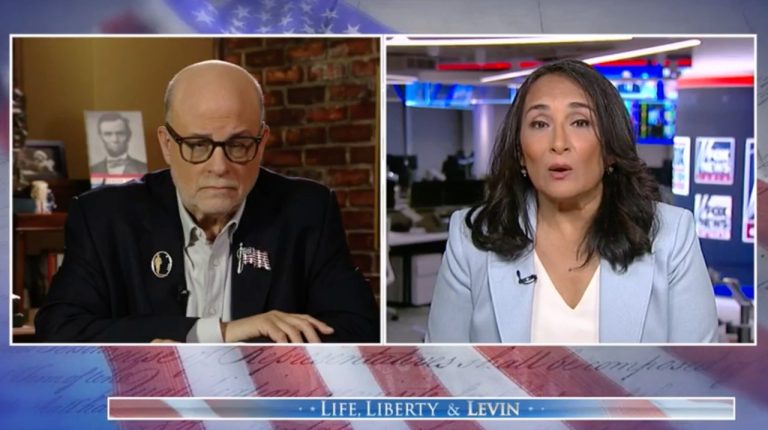
On Tuesday’s Mark Levin Show, Chief Justice Roberts improperly relied on English common law as a basis for birthright citizenship, despite the framers using it only as a guide and rejecting elements that conflicted with the U.S. system. The 14th Amendment and the preceding Civil Rights Act of 1866 were narrowly intended to grant full citizenship rights to freed Black slaves and their children amid post-Civil War resistance—not to address immigration or confer citizenship on children of illegal aliens. The opinion wrongly equates “jurisdiction” with mere physical presence, leading to illogical results like automatic citizenship for babies of illegal immigrants (who retain foreign allegiance) while creating unaddressed exceptions for diplomats, revealing a result-oriented, activist approach that rewrites history. Roberts and his Majority twisted the history of the 14th amendment and just constitutionalized birthright citizenship, knowing full well that our nation, like Europe, is facing a grave threat from within as a result, in part, of the intentional refusal of our government, when the Democrats are in power, to enforce immigration laws and, oppositely, facilitating the importation of aliens from all over the world without proper vetting. Also, the constitutional amendment process is rarely used. It requires two-thirds approval in both houses of Congress to propose language, followed by ratification by three-fourths (38) of the states—neither of which is feasible for issues like changing birthright citizenship. The Supreme Court has constitutionalized elements not originally in the Constitution, making reversal through amendments impractical. Instead, the effective path is filling Court vacancies with constitutionalists, as achieved in overturning Roe, without resorting to court packing. Later, Hans von Spakovsky calls in and explains that Roberts’ opinion was appalling and a complete rewrite of American history, particularly regarding the 14th Amendment. He notes that Justices Alito and Thomas eviscerated it in separate dissents, highlighting that Roberts’ historical account was inaccurate. He criticized Roberts’ selective and distorting use of sources like Thomas Paine and Frederick Douglass, pointing out Thomas’s observation that Douglass viewed Black Americans as citizens due to their equal allegiance to the U.S., unlike illegal aliens who owe allegiance to their native countries. Finally, Thomas Jefferson and James Madison favored limited central government, while Alexander Hamilton preferred a powerful, activist federal government with implied powers. Modern nationalist populists share this Hamilton big-government outlook with the left, which lacks clear constitutional principles and risks abuse, in contrast to true constitutional conservatism.
Photo by Philip Yabut
The podcast for this show can be streamed or downloaded from the Audio Podcast page.
Rough transcription of Hour 1
Segment 1
Hello, America. Mark Levin here. Our number 877-381-3811. 877-381-3811. I’m not going to be as generous as my friend. Hugh Hewitt are some of my other friends who’ve been on TV and radio, some saying what a swell job the Supreme Court did and. Robert’s decision was absolutely brilliant. I spent a lot of time today going through them very, very carefully and not quickly. I will be on HANNITY tonight and I wanted to wait on that appearing here and there this afternoon so I could consume it all and break it all down. A lot of people say, well, now we go to the constitutional system, the amendment process. When’s the last time the Constitution has actually been amended? It’s been a long time. Hasn’t. Go ahead and Google ad Mr. Produce, or you’ll be surprised. When is the last time? Now. Well, go ahead and Google it. You’re about to find out. Not not recently, I’d tell you that. You see, ladies and gentlemen, in order to have a constitutional amendment, and then I’ll circle back. As you know, from listening to this program, there are two methods. Number one, the only methods ever actually been used. You need two thirds of both houses of Congress. To adopt language for an amendment. They both have to agree on it. Then it goes to the states with the legislatures, and the conventions thereof requires 38 states to approve. Three fourths of the states. Now, how many of you think that you’re even going to get anything close to two thirds of the House or Senate to change birthright citizenship? None of you assume because it’s never going to happen. Then we have convention of states, which is really a fantastic organization. I am strongly behind it. The problem is we don’t have 34 states that have signed on yet. I think we’ve 20 or 22, which is remarkable under the circumstances. Slow, but sure. But that process isn’t ready either. And then on top of that, look how everything is switched. The court just went ahead. And constitutionally, something that’s not in the Constitution has never been in the Constitution. And now it’s up to you and me to undo it. By getting a constitutional amendment passed. So you’re going to have a lot of. A lot of these senators, these Don Quixote types, who are basically fraudulent. I introduced an amendment to the Constitution to do this or that, and unfortunately, it’s not going to go anywhere. What we need to do is if there are vacancies on the court, put constitutionalists on the court. And that’s how Roe was reversed. That’s what’s going to have to happen. I’m not talking about packing the court. We don’t do that. I want to briefly go through some of the points that I made on line as I went through this. I try to put it in very plain English and very concisely on this birthright citizenship issue, but there’s something fundamentally shocking. Let’s start. Chief Justice Roberts begins his opinion, arguing that the states and the framers relied on English common law in writing the 14th Amendment. But that isn’t the whole story. They used it as a guide, but rejected it when they thought it conflicted with our constitutional system. Certainly is not a sound argument, to use it as a basis for the 14th Amendment of the Civil Rights Act that preceded it. They were addressing specifically the problem of some formerly Confederate states after the Civil War. To recognize freed black slaves and their children as citizens with a full and equal rights enjoyed by all other citizens. What am I talking about there? Early on in the opinion, as the foundational basis for his approach to the language in the 14th Amendment, and he returns to it later in his opinion as well. He emphasizes English common law from the 1600s. Now English common law. He argues incorrectly, When you are born in the sovereign territory of the king of the monarchy. You are automatically a citizen for most situations. Okay. A citizen Of what? A citizen to the sovereign. That is a citizen to the king. That was your sovereign. And so, of course, the king viewed Anybody born in my kingdom has allegiance to me. The King. Now, what’s the problem with that? That’s not what the founders of our country, the framers of the Constitution, said. Obviously, English common law from time to time, as I’ve wrote here. Had a had a guiding impact on what they might do, but they abandoned it often. And they certainly didn’t adopt this viewpoint. When constructing the 14th Amendment. In 1868 or the Civil Rights Act of 1866 that preceded it. That’s not how they view things. And so the entirety of this opinion that Roberts puts out that the majority has signed on to is based on a false premise. And yet he needs to do this because what the hell else is he going to base it on, not explain. Let me go on now. He references, interestingly, Thomas Paine and some of the others. And I say I’m a huge fan of Thomas Paine, but his powers of persuasion during the Revolutionary War. Had little or nothing to do with the formulation of the 14th Amendment. Roberts creates a hodgepodge of references to make what is basically an argument looking for founding principles. He must. For the truth is, this case was so straightforward. And the facts in history so clear. The majority had to do what lawyers do when the facts and the history against them create contrivances. Now, this part of Robert’s opinion is especially absurd. The. Indomitable Dred Scott decision, the abominable Dred Scott decision. Had nothing to do with immigration, let alone illegal immigration. It held that freed blacks and black slaves were not citizens, and Congress could not even ban slavery in federal territories. Thereby upending the Missouri compromise. This would lead in great part to the Civil War, which also had nothing to do with immigration, let alone illegal immigration. And I write as I continue reading the Roberts opinion. That is the court’s decision. It does a grave injustice to the purpose of all constitutional, legal, political and ultimately military conflict aimed at dealing with. And then ending the enslavement of black people. Instead, it attempts to create more generalised policy and legal arguments that are simply deceiving. The terrible wrong was the enslavement of black people, not some immigration policy. That’s what was at issue. The only purpose of the Civil Rights Act of 1866 was to use the power of the federal government to confer on all former black slaves and their progeny the same rights that applied to all other citizens. Because of continuing resistance in the former Confederate states. That’s why it was called a Civil Rights Act, not an immigration act. When President Andrew Johnson vetoed it, it was clear to the Republicans that they needed to enshrine it into the Constitution, that it was born the 14th Amendment. As Roberts continues moving through his decision, he again appeals to English common law as the basis for the 14th Amendment. But notice what’s missing. We’re all these stirring speeches by members of Congress and the state ratifying is supporting Roberts proposition. Keep something in mind. Listen, this is important. Two thirds of both houses of Congress must propose amendments to the states. In turn, three fourths must ratify amendments. That means despite all the debates and speeches that occurred around this amendment, Roberts and the proponents could not find support for their position. You get my point, Mr. Producer. If he is taking the position. The framers embraced English common law. That this is how they view jurisdiction. They want once born in the sovereign of the king. Then you are a citizen to the king. That that applied to our country. When it surely did not. Where are all the great talkers? All the great speech makers. Well, the great declarations from members of Congress, Senate and the House from legislators were some of the greatest orators existed. Where were they standing up and saying this was their position on birthright citizenship? There’s not one. There’s none. They don’t exist because the focus was the terrible problems that arose in the South after the Civil War, the rise of the Klan, the horrendous violence and the lynchings against blacks. The overall difficulty with reconstruction. Congress and the states were not thinking about birthright citizenship for the children of illegal aliens. They weren’t glued to the ideas of English common law. The 13th, 14th and 15th Amendments were about creating the constitutional protections for freed black slaves throughout the nation, not citizens of other countries who hadn’t even arrived on our shores legally or illegally. The extent to which Roberts and the majority have to rewrite our history to reach a decision is an ugly business. Now we come back to this where jurisdiction where Roberts makes the same argument as those who’ve always supported birthright citizenship make. That is, jurisdiction means physical jurisdiction for pregnant mothers in our country illegally and has their baby in our country. The baby is granted immediate citizenship, according to this argument, because it goes back to 1600s English common law where if you’re born in the land of the monarchy, then you are a servant, a citizen, an automatic citizen to the monarchy. I’ll think about this for a matter. It is a matter of logic. Does it make sense to you? Does it make sense to you? But a pregnant woman comes into our country and conferred jurisdiction on her baby simply on her own. Is that make any sense? Do you think that’s what the framers had in mind? More with the country from where the parent comes, continues to treat that baby as a citizen of their country. So that’s not exactly allegiance to our country. And how can the baby have an allegiance to anything? Because the baby doesn’t even know what’s going on. And why are these exceptions for babies born of diplomats and so forth? Does the 14th Amendment, if it’s interpreted as Robert insists, create exceptions of any kind? Now, we’re going to continue. I happen to think the Roberts opinion is absurd. Very. Result oriented, very activist. But he gets that fundamental issue wrong as I posted, what, an hour or two ago? That is. Excuse me. English Common law as a guide. Sure. But they didn’t abide by it like it’s the Bible and they reject aspects of it like this one. I’ll be right back.
Segment 2
Welcome back, America. Shall we continue? I think we shall. Now, this language is important jurisdiction. We go back to this word jurisdiction thereof. Listen to me. I’m walking you through it. Come back to the word jurisdiction where Roberts makes the same argument as those who’ve always supported birthright citizenship. Make. That is. Jurisdiction means physical jurisdiction. You’re here. That’s it. So if a pregnant mother is in our country illegally and has her baby in our country, the baby is granted immediate citizenship, according to this argument, for two reasons. Number one, under British common law, the subject’s born. In the Kings Kingdom. Our subjects. Well, that’s ridiculous. That’s not what the framers believe, But that’s that number two, it’s the plain language. It says jurisdiction. What else could it possibly mean? Now, as I said, Does that make sense to anybody? So a foreigner cannot unilaterally confer jurisdiction on herself. Illegally, I guess, by conferring their jurisdiction on her soon to be born baby by coming into the United States illegally. That defies simple logic. So is that what the framers of the 14th Amendment meant? Of course not. And they never said that. And meanwhile, the country from where the parent comes, continues to treat the baby as a citizen of their country. China does this now. The language states the following in the amendment all persons born or naturalized in the United States and subject to the jurisdiction thereof are citizens. Notice the authors did not leave it at all persons born or naturalized in the United States. Our citizens. They didn’t say that they had a language that would have been enough. So why did they add superfluous language? Superfluous language because the rest of the sentences key to what they intended, subject to the jurisdiction thereof. So all persons born or naturalized to the United States. They didn’t say our citizens. They said subject to the jurisdiction thereof. It means subject to the political allegiance to our country and no other, a fundamental duty of loyalty to our country. Patriotism, part of this civil society and legal bond, societal ties in exchange for which you receive the legal rights and protections afforded all citizens. Somebody just walks into the country. None of that applies.
Segment 3
Pretty shocking. Pretty shocking. I think basically what Roberts has done is rewritten American history. That’s what he’s done. Let me go on. Now they point to this 1898 case, Supreme Court case, United States versus Wong Kim Ark. That case is totally irrelevant. Has nothing to do with babies of illegal aliens. And that case involved the birth of a baby from lawful permanent residents. Hello? Lawful permanent residents, not the baby of an illegal alien. But the language in that opinion was so broad and so over the top. Then Roberts used it, as do others in the birth rate legal world, by the way, to apply to babies born of illegal aliens. But that has no. No relevance. So you can see that Roberts and the court majority were looking for an outcome and dressing it up as a constitutional decision. And in doing so, they’ve taken judicial activism to new heights. The decision will have enormously detrimental cultural, societal, legal, economic and national security consequences. And now we are told that we, you and me, we must amend the Constitution if we wish to change what a rogue chief Justice and court majority did in abusing our Constitution, knowing full well that two thirds of members of Congress will never vote to send any amendment to the states that alters what half of Congress intentionally did to our country, and that there are not enough states. Even with a convention of states to ratify an amendment 38 states, when and if we get to the magic number of 34 states supporting a convention in time to stop the ongoing damage can. So you and I are supposed to have a discussion with each other on how to fix this? The way we fix it is more serious constitutional conservatives on the court, Roberts and Barrett. Severely undermined us. I know I have a friend out there online who tells us all the wonderful things Barrett has voted for and so forth and so on. That doesn’t fix this. It doesn’t change this. There are some decisions. Better have much more importance and others. This is a huge deal. This is a big, big deal to constitutionally something that’s not in the Constitution. The claim that it is to rewrite American history. As a Republican appointed chief justice. Is appalling. Appalling. We use British common law as a guide from time to time, but have never been wedded to it. Never. We’re a constitutional republic. That’s why we are. Now. Robertson as majority twisted the history of the 14th Amendment. And just institutionalize birthright citizenship, knowing full well that our nation, like Europe, is facing this grave threat from within. Now, Clarence Thomas dissent is long and absolutely brilliant. And he gets into this issue of jurisdiction. He says, wait a minute. Let me tell you what jurisdiction means in America. And page after page after page. Excuse me, he points out, in American history. Jurisdiction means domicile. Where you domicile. Even today. I’m in this state. I’m in that state. Great. Where are you domiciled? We are domiciled. You get the vote where you domiciled, you pay your taxes where you domiciled. The law applies to you. Where are you domiciled? That’s how Americans view jurisdiction, he points out. Where are you domiciled? And he does more than that step by step history and constitutional law that brilliantly, methodically unravels every aspect of Roberts argument. Alito the same thing. Another brilliant dissent, a brutal takedown of Roberts and majority. And he hits too, at this constant refrain about British common law being the basis of our understanding of citizenship. No, it’s not. We’re not talking about allegiance to a king. Even Britain abandoned that. And yet that’s the entire basis for jurisdiction, pretty much. And in the Thomas decision, which is also cited, the dissent by Alito is quote after quote after quote of the of the authors of the Civil Rights Act of 1866, as well as the. 18 68/14 Amendment to the Constitution. But everything I’ve just told you hasn’t been told to you by a single lawyer on television. By a single legal reporter on television. None. Because this is what I’ve done all my life. Take court decisions, especially these important court decisions, and break them down. And break them down. In 1866 they weren’t trying to preserve. English common law. They were dealing with a real problem. In 1868. 1866, they still had rebel states. They refuse to acknowledge or recognize. The legitimacy of black citizens. And the Klan was started. The lynchings were horrendous. The beatings, the rapes. Just disgusting. Horrendous. And they needed to deal with it. They weren’t thinking about immigration, for God’s sakes, let alone aliens. And illegal aliens and their children. If I’m wrong, prove it. Show me where. Show me anywhere. A constitutional amendment that’s not a little thing. Supermajority of the House and the Senate, Super duper majority of the state legislatures, they’re all debating. They’re all talking. They’re giving speeches. They’re newspaper reports. Show me, Show me. They can’t show us. So they rewrite American history. That’s what they did. They rewrite American history. Now, let me tell you something else that bothers me about all this. By trying to expand what took place in 1866 and 1868, by trying to expand. On that whole notion. That this was directed specifically. And getting square, getting it right, getting it straight with our fellow black human beings to make sure that their lives. Could be free and equal and participate in this country. We’re talking about illegal aliens now and the children of illegal aliens. That was one of the purposes of the 14th Amendment. In other words, where we’re dumbing down. We’re dumbing down the purpose of all these actions that took place. It had nothing to do with British common law. It did nothing to do with immigration. It had nothing to do with the children of illegal aliens. We were trying to get square with. Slaves. Former slaves and their children. The 13th Amendment abolishing slavery. Officially the 14th Amendment. Equal rights due process. That freed. Black slaves and their progeny were to be treated as other Americans. And then the 15th Amendment, the right to vote, and nothing to do with the children of illegal aliens. And you read these comments online. Read these comments. Well, what did you expect? We have 150 years of this. What are we going to do? Reverse it right away? You know, it’s interesting about that comment. Justice Kavanaugh wrote something. In his decision. Which was very technical. He voted that the the executive order violated a federal statute. He didn’t really take a big position on the Constitution. So people are saying it was a54 decision. It was a63 decision. No, it was a63 decision because he voted down the executive order. For whatever the reason, it doesn’t matter. He voted it down. But not on constitutional grounds. But he said. Along the lines of the compromise that I was even thinking they might do. Which is. We’re not going to constitutionally ize birthright citizenship. It’s not in the 14th Amendment. I don’t care if they’ve been practicing it for 150 years or not. And by the way, that’s not correct. For 40 years after the 14th Amendment. My view, the president’s view. The view of other. Solid constitutional conservatives. Our view was the view that was upheld and followed for 40 years after the adoption of the 14th Amendment. So it wasn’t a 150 year. That said. Well, Congress could do. Is the following. The 14th Amendment does not say. That just because you’re born in America of illegal aliens, you’re a citizen. But Congress. But the 14th Amendment does not say Congress can’t grandfather in all those people. Who are already treated as if they were birthright citizens. So in other words, you have somebody here who’s 83 years old now again. They’ve been here since they were 14 years old. And so what he’s saying is Congress can still pass a statute and say, look, we’re cutting off birthright citizenship on this date. Anything forward? No. Good. Which is the point I made. I thought the Supreme Court might actually do that. But no. Bridge too far. Am I making sense? You understand my point, which is not. I want to repeat it. So there is a fix, quote unquote. If Congress wanted to do that kind of a fix, it doesn’t have to apply to everybody going back. God knows how long. But that said. But this court did was. You want to open the floodgates, Democrats, You want to break existing immigration law. Democrats, you want to fail to uphold the law, which, by the way, is a violation of the Constitution. Democrats. Well, you’re going to be rewarded. Your party’s going to be rewarded. The illegal aliens going to be rewarded. Everybody is going to be rewarded no matter who’s coming in. So if you have a terrorist, a female terrorist who comes into the United States and she comes into the United States, let’s say from Qatar, she has a baby in America. That baby is a citizen of Qatar and the United States of America. Then she takes them back to Qatar, raises the little bastard as a terrorist. Then that citizen can come back to the United States because he’s American citizen folks. This Hassan Piker. Was born in America, taken back to Turkey, radicalized, pro terror, brought back and you see what happens. Communist Chinese. Why do you think that? They’re pushing for hundreds of thousands of birth right babies in our country? They’ve set up a whole assembly line, massive system. Were these pregnant Chinese women coming here from communist China? They had their babies and they immediately take them and go home. They’re creating spies, saboteurs, people who will be loyal to China, not to the United States. This is what the framers of the 14th Amendment we’re talking about. They have China in mind, obviously, but there needs to be a political allegiance, a loyalty. Or, as Clarence Thomas puts it, some kind of domicile relationship with the country. You don’t just walk in and have a baby and you confer citizenship on that baby by giving them birth. That’s insanity. And the idea that in the middle of Reconstruction and all the hell it was taking place immediately after the Civil War. Now, that’s what these men were thinking. I was discussing Shame on John Roberts. It’s an appalling decision. It’s a rewrite of American history. We’re not subjects to a king. We are a constitutional republic. And no, the word jurisdiction does not mean. What he says it means and the basis for what he says it means. I’ll be right back.
Segment 4
I will be on HANNITY tonight. It’s the only show I’m being on because it’s the only show I wanted to go on because I wanted to really digest all this. In. I’m not sure a pop up opinion on a decision that includes about 200 pages of comments and so forth and so on that that it can be done properly in that short bit of time. I see my buddy Hugh Hewitt. You know, Hugh’s a rhino, but he’s an old friend of mine, and I believe he’s an old friend of Robert’s. I could be wrong. He thinks this is a great day for constitutionalism. I am prepared to debate anybody on my program here. And what a great decision this is, because it’s an abomination. There’s not a damn thing great about it. Rewriting American history, basing it on the power of the king. Ignoring how we constitutionalists. But even more than that, the framers, including the framers of the 14th Amendment, thought and what they said. Is unacceptable to me and I am prepared to debate. I saw the vice president did an interview. I forget who with NOLs is the guy’s name, maybe Michael Knowles, but I could be wrong about that. Or he said it’s time to abandon Milton Friedman for Hamilton or something to that effect. I think what he meant was it’s time to abandon Jefferson and Madison for Hamilton. And Jefferson and Madison. We’re really the adversaries, too, Hamilton. Obviously, Milton Friedman was a free market Austrian school economist, among other things, a great, great man. But the original relative free marketeers were. Madison and Jefferson and their ilk. Hamilton is loved by the left. Do I owe you something? Is that what you’re trying to say? Okay. And get back into this a little bit later. That’s a debate I’d love to have loved to have. Because. HAMILTON you know, these are my areas of expertise where I have a lot of fun. Hamilton was more than. About centralized big government. He also rejected major aspects of the Constitution after it was adopted, even though he argued for it. I’ve got to get into that. I’m not done. I shall return.