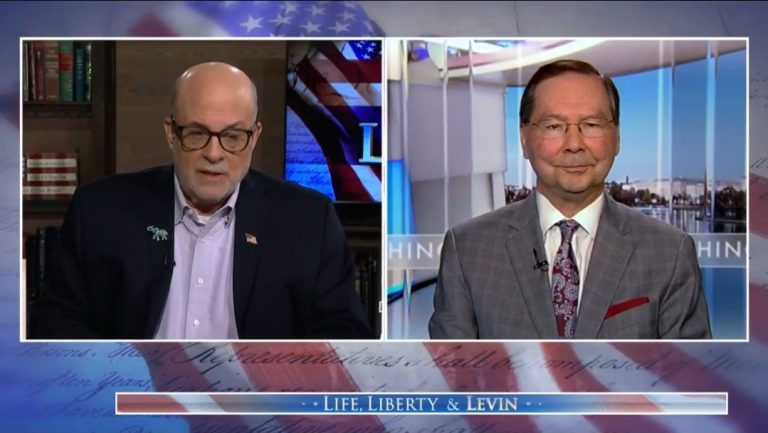
On Tuesday’s Mark Levin Show, Special Envoy to the Middle East Steve Witkoff calls in to break down his stunning negotiations with the Iranian regime before President Trump made his decision to attack. These meetings were to explore whether a verifiable, enforceable nuclear deal was possible under Trump. From the outset, the Iranians asserted that uranium enrichment was Iran’s inalienable right and declared their large stockpile of enriched material—approximately 22,000 pounds—was off the table for negotiation. This could yield about 11 nuclear bombs if further enriched. Witkoff and Jared Kushner quickly became skeptical of Iran’s willingness to make acceptable concessions. These meetings convinced Witkoff and Kushner that Iran had no genuine interest in a civilian nuclear program. Instead, Iran sought to disguise an ongoing research and development effort to maintain enrichment flexibility and breakout capability. Rejecting the no-enrichment deal revealed their true motivations were not civilian but weapons-oriented, allowing rapid production of enough material for dozens of bombs if unchecked. Witkoff reported these deceptions and unassailable facts to President Trump, who then made a tough, consequential decision in response. Later, our Framers of the Constitution were so brilliant and prescient. What you see, right now, occurring in Congress, is precisely why the delegates at the Constitutional Convention did not confer war powers on Congress. In fact, the delegates specifically changed the original draft of the Constitution from Congress having the power to make war to the power to declare war. That is, Congress was granted the authority to declare its support for war, not declare war as a condition of making war or going to war. And it is precisely why declarations of war have never been determinative in whether war is made or not — since the beginning of our Republic. It is also why Congress cannot force the commander-in-chief to go to war by the act of declaring war.
Times of Israel
Persians freed the Jews, now the Jews are freeing Persia
Daily Mail
Republican senator explodes at Kristi Noem over immigration crackdown: ‘It’s a DISASTER… resign’
Photo by Andrew Harnik
The podcast for this show can be streamed or downloaded from the Audio Rewind page.
Rough transcription of Hour 1
Segment 1
Hello, America. Mark Levin here. Our number 877-381-3811. 877-381-3811. We have a special guest and I believe I’ve only ever interviewed Steve Woodcock, as a matter of fact. Steve Wyckoff, how are you, sir? Very good, Mark. How are you doing? I’m doing great. And I wanted to have you on the program because you have some information yet that you touched on or on HANNITY last night as well about your experience, Jared Kushner’s experience in dealing with this Iranian regime before the president decided it was time to pull the trigger. Can you fill us in on this? Well, first of all, Mark, you know, the president sent me and Jarrett in because he wanted to really determine if it was possible to make a deal that they would sign, not just agreed to, but that they would sign and that they and that could be enforced. And so we went back and we began the session in Oman. We were in Muscat, and, you know, we had two other meetings with them in Geneva. And I would say that they wanted to record a lot of positivity. And Jared and I from almost the go were were suspect as to whether they would they would really they would do the type of deal that would be acceptable to President Trump. And we turned out, I think, to be right. So the first meeting you never met face to face, I take it? Is that correct? Now we met face to face. They came to the boss’s back in Tehran, had said that they couldn’t do it direct. The foreign minister from Oman. Fighter Buzzati. What was the mediator? So we met at I want to say I can’t remember who might have been his home, but we met at his home and, you know, they were very gracious. Araqchi and his team, his deputy and some other people were in another room, but they but they came and joined, you know, after they had some conversation directly with the Omanis, they came enjoyed joined Jared and I in the room. And that’s where we had direct conversation with them. I remember the first meeting, Mark, that that that we had in Muscat at some point very, very, very early in the conversation, Araqchi laid down the marker by saying enrichment is considered to be by his leadership. Iran’s inalienable right. Hmm. That that’s that’s sort of that sort of, you know, began it at at that point we we began discussing the material, you know, the all of the all of the enriched material that they had been stockpiling as close to 10,000 kilograms, by the way. And at some point during this interview, I’ll take you through the breakdown of it all. But they began discussing it, and Jared was a witness to this. They were talking about the 60% enriched material, which is roughly 460 kilograms. And to to get to weapons grade, which is 90% for a bomb, you’re about a week, maybe ten days away when you’re at 60%. So they’ve got all this all this material at 60%. And it’s, you know, obvious concern to us. And and he knew it. And he said to us, you know, and I know and the Europeans know because they attest to it, that that’s 11 bombs. So that’s that’s why this material is so important to you. And I’ve described that as them being proud that they held it, that this was you know, this was something of a of a trophy that they had. And there’s no doubt in my mind that that’s how they that’s how they thought about it, about that material. But let me let me tell you 111 last point about that first meeting, because it’s sort of fascinating as we were talking about all the material and the material includes roughly 8000 kilograms of enriched material is 3.67%, another thousand kilograms and 20%, which is a story unto itself. And then just roughly 460 kilograms at 60, we were told let me just say this. Let me say this, Steve, for the audience. A kilogram I just looked it out is £2.2. Go ahead. I’m sorry. That’s right. That’s right. So they have in total around 10,000, around 10,000 kilograms, which is £24,000 of enriched uranium that was never intended to be used, Mark, for civil purposes. And that could only do one thing to it. It could only be stockpiled in a move towards weaponization, is the only reason why you would have it. But but let me let me give you a telltale sign, because part of the reason we were there for the president was not just to negotiate, we were negotiating, but we were there to give the president an honest read on what we felt their motivations were and whether they would do a deal and do a deal that was enforceable. So I’m going to I’m going to read you what I wrote down at that at that first meeting as to what they said to us. Their their lead negotiator, the foreign minister from Iran, said the following, talking about giving up the material. Why? Why, Why would we want Oh, here it is. We will not give you at the negotiating table what you could not win militarily in midnight. Hammer Jeez. So what are you going to give it up? He did. He didn’t say Midnight Hammer, because that’s that’s our that’s our work, you know, that’s what we named it. So he didn’t say that, but he basically said, we’re just not going to hand it over to you. Now, here we were, you know, with ships in the region, we were posturing for all the right reasons. It’s peace through strength. That’s the only way you’re going to get them to the table. Without that, there were never going to be at the table. And we’re there presumably because they’re in a tough spot and they’re going to be compromising and elastic. And yet you hear these what I’ll call maximalist statements. We’re not going to give you what the negotiate at the negotiating table, what you couldn’t win militarily. And I remember thinking to myself, this this, you know, pretty much foreshadows how they’re going to beg. And it was that that said that in my in my view. And there was there were plenty of other, you know, alerts to us. But but this was remember the first meeting, Mark said, to be clear, we had this first meeting. They had over a ton of this physical material. Over a ton. That’s what you said, 20 £400. And they’re telling you it’s off the table. No, it’s. No, it’s more than that. We have more than ten’s 10,000 kilograms is 10,000 times 2.2. Oh, my God. 24,000. Correct. And they said hats off to take on the first and the first. Now, that was now, Mark, it’s different. Well, no, we were negotiating to get it back. But yeah, they were making statements about how this was a trophy piece. We had to consider that. Look, I’m remember saying to the negotiators from Oman and others who had called us up hoping for a diplomatic solution, and I remember saying, not dissimilar to the days of Hamas when we negotiated the release of the hostages and in particular e Don Alexander, when we were sitting at the table with Hamas, who were who were, in my view, in some respects more reasonable than these guys. I remember that Hamas was more reasonable than these guys. I just want to underscore that I’m not by the way, I’m not saying that reasonable people know I got that textually more reasonable than what we experienced here. And when I say that, I mean the following. We presented the arguments for Edan Alexander being released, and he was the last American that was being held captive was alive. There were two other Americans who who had died. We were waiting to get their bodies back. But he was alive. We wanted to get him out alive. And I said to him, I remember talking to Hamas, me and Jared, and saying, You should do this. You’ll build some degree of political capital with the president. And guess what? They did it. And they and there were things or accommodations that we made later on for them in consideration of that. And I remember saying to the Omanis, with regard to the material that they were holding, they should turn it over to us if they profess that they have no bad intentions here. If they profess that they no longer possess the ability to enrich. If they if they if that is truly and genuinely how they feel, then why would they need the material? They should handed it over as an act of goodness. And that would set the tone for how this negotiation would be. And I think that you would see President Trump as the sort of man who would acknowledge that. Right. He would acknowledge that, you know, that was a you know, that’s a statesmanlike move. And they were just not interested in that. That would have been good advice for them to take, but they just weren’t at that place to take it. And I think in large part it’s because how their system works. They had a supreme leader. They had won everything. You know, it’s really like a sort of intractable environment over there. You can see that the negotiators just did not have flexibility or they weren’t delegated the authority to make decisions on this spot. President Trump gave me and Jared a lot, a wide berth, you know, to negotiate this deal. He you know, he delegates well. I don’t think he gets enough credit for delegating. Well. Now, Steve, the same people I know you need to go, but I’m not going to let you go. I need one more segment with you. Tell whoever is dragging you away and want you to stay. I’m not trying to leave you. No, no. I have to take a break. I have to take a break. Oh, so don’t forget where you left off, because this is really important and very intriguing as far as I’m concerned, to get this story out to the American people. I’m talking to Steve Wyckoff, you know, the go to envoy with Jared Kushner. And we will be right back.
Segment 2
All right. We got Steve Westcott and want to move quickly. We have only a few minutes in this segment, but Steve has agreed to go after the break, which is great. So, Steve, pick it up where you left off. And where was I? Mark, I you. You pretty much came to the end of the first meeting. They had enormous amount of this material. They basically said, We’re proud of it. Then you have a second meeting. How did that go? I would say the second meeting was, you know, a little bit more purposeful than this, than the first meeting. But because we got them to agree to present to us some sort of agreement, because we were wide apart on the first meeting, we just we were just wide apart. They were not coming there prepared to I would have hoped that they were coming there with concrete proposals like come and pick up the material a week from today and we’ll turn that over as an act of good faith. And then let’s have a discussion about enrichment. But it was nothing like that. So the second meeting, we ended with an agreement for them to send an agreement which they promised we would get 5 to 6 days after that second meeting ended. And this is another data point. We never received it until the third meeting, which they never even which, by the way, and they never gave us the agreement on the third meeting. They let us read it. And that’s a whole story unto itself as well. But I want to say this, Mark, I just read something online about the Iranian negotiator saying something about, you know, relatively nasty about Jared and I saying that depicting us as calling us, saying that we engaged in quote unquote, diplomatic treachery, that we were not there to make a deal. We were we were maybe duping them in some way. And I’ll tell you something, it’s interesting that he writes that, because that’s exactly how we saw what they were doing. They were pretending they were pretending to negotiate. There’s no ifs, ands or buts about it. They were they kept talking about great progress being made. They said it. No. Yeah, they did. We would not sign it. We were never signed on to a statement about great progress ever. We refused to sign it because we weren’t making great progress. And in fact, we complained about the progress. What we did was we pointed at the ships that were out there, you know, some symbolically, metaphorically, and said they’re here for a reason. They here because that’s peace through strength. That’s the that’s President Trump’s policies. And you need to you need to sort of get on the ball. And we need to get this we need to get this finished in some way. But, you know, the word is obfuscating. They were obfuscating the entire time. And I remember thinking to myself, you know, they they hide their nuclear activities. They lock Rafael Grossi from the IAEA out. So he hasn’t been able to make an inspection since midnight. HAMMER They hide their ballistic missiles in places that are difficult to find out where they are. And yet they they, they they talk about us as being as being not genuine and, you know, and purposeful. And it’s actually that what they accuse us of is exactly what they are doing. And, you know, we have we’ll probably get this let’s get to not this piece of it, but in the next segment we’ll get to it. Tehran Research Reactor, because not only are they have they systematically hidden their activities on ballistic missile production and on nuclear, but there’s hidden more. Tehran research reactor was actually doing all right. That’s all right there. The research reactor. We’re going to pick it up right there, Steve, and we really appreciate your time and your and how forthcoming you are and what took place. So we’ll be right back with Steve Whitaker.
Segment 3
Well ladies and gentlemen, you’re getting an inside view. One of the principals who was negotiating with the Iranian regime. Steve Whitaker, we do appreciate your time, Steve. So I want to. Be quiet and let you go on this research facility. And then the third, meaning the final meeting. And then if you’re allowed to and I don’t want you to breach anything what you told the president. Okay, So so, Marc, first let me take a step back. This is all sort of around the third meeting. But leading up to the third meeting, we also saw signs that that made us feel that they were being disingenuous. They promised and they promised an agreement at the second meeting that we would get five days after we never got it. We asked for it continuously. You can’t work on these things unless you have some sort of paper that you can, you know, there it is palpable on the paper. We can have a discussion about it. They refuse to give us the agreement on at the third meeting, but they let us peruse it, which was not acceptable in any event. Let me let me let me get into because the third meeting involved Tehran, because it was discovered Tehran stands for Tehran Research Reactor. There are industrial grade reactors and there are research reactors, Esfahan, the Times, Fordo, which were enrichment facilities and and so forth. Those are they were all enriching at an industrial grade level. Those were all wiped out and wiped out during the Midnight Hammer operation. And and one of the steel points here was for all of those facilities to be decommissioned and permanently shut down because they had no use but to make they had no use but to make enriched material and have it stockpiled for later use. There was no civilian use attached to it. We did talk to the Iranians for a long time about doing something called the civil one, two or three nuclear program, where they could get all the to have all the nuclear they wanted, but they couldn’t enrich. It would be bought from the outside, from whether it’s us, the Russians, the French, it’s readily available. And countries like Abu Dhabi are running civil one, two, three programs for their own internal needs. A civil needs mean that you are generally enriching to 3.67% in a 1 to 3 program. You’re not doing the enrichment because you’re buying it from an outside purveyor. But the fuel is being delivered at 3.67%. A research reactor like Tehran Research reactor must enrich because it’s a research reactor to do radioisotopes. Radioisotopes are in require as an ingredient for the process. Enrichment of nuclear fuel at 20%, 20% is roughly five and a half times 3.67%, which is that level needed for civil use to provide electricity and so forth. So that’s five times five times the level of the JCPOA at 20%. And for quite some time, everyone on this earth was under the assumption that Tehran was enriching at 20% because they were genuinely producing radioisotopes for the betterment of Iranian society. Those radio isotopes to be used for making medicines, cancer research, agricultural research to make more efficient crops, things of that sort. And when they gave us this agreement in the third session, that’s seven pages, and they let me read it and I become I wouldn’t tell you I’m a I’m an expert in nuclear, but I’ve learned quite a bit and I’ve studied and read quite a bit about it. And, you know, I’m competent to sit at the table and discuss and and Jared is as well. We read the agreement. And what did we figure out? We figured out that they wanted to do other research reactors. And the reason they wanted those other research reactors is because the enrichment there starts at the 20% level, five times more than JCPOA. And then we we saw embedded in their flowchart as to what they needed is that they had they had consumed all of their fuel at Tehran when in fact they had not the IAEA had evidence that they were stockpiling there and they had enough fuel to run tirar. For the next seven or eight years without any additional fuel being delivered. So what were they doing? The IAEA. They were stockpiling again at the 20% level wide by labelling it a research reactor. They got to begin enrichment at 20% with no intention of using it for radioisotopes. They they did an experiment here or there to sort of keep up the deception, but basically they were enriching at 20. And why? Because maybe it’s a month and a half from 20 to 90, which is weapons grade at 60%. It’s a week to ten days, but 20 gives you a big head start over 3.67. So effectively, what we figured out in the third meeting is, is that their agreement proposed based on, quote unquote, what they claim were Iran’s needs. Their agreement proposed put enrichment potentially at five times north of where the JCPOA had kept them. It would begin for these research reactors at 20. And it was clear that this was a subterfuge. There was no mistaking it. And they got called out at the table by Rafael Grossi from the IAEA, who said, clearly, you’re not doing what you claimed you’ve been doing it to your which is enriching for radioisotopes. We know you’re not doing it because all the fuel is stockpiled. So you could have been burning anything. What they said that was like and that was that was more almost the Perry Mason moment. Hmm. And what did they say when you called them? Right there at the table? They really didn’t have an answer. Certainly not a not is not a satisfactory answer. And as we began to explore this plan at the table and that we were reading it, we’re not telling them what we’re seeing. At the time, we we discussed it a little bit after, but we really wanted to report the results. It was it honestly, it it it led us to absolutely conclude that they weren’t just hiding what they were doing with enrichment. They weren’t just hiding what they were doing with their ballistic assets, which they’re very, very good at making. But they were disguising a research and development program from a nuclear standpoint that they sold as being helpful to their people. Hmm. And it was anything but that. It was intended to be stockpiled. And you have to presume that that meant it was going towards. So, Steve, let me ask you a few quick questions, because you’re going to have to go soon. Let me ask you a few quick questions. So they really were deceiving. You were attempting to from from day one, correct? Correct. And all this talk about progress that they were putting out there, even now they say we don’t know why they hit us. We were making progress. It’s all B.S.. Well, you know. It’s B.S. And let me tell you why he’s smart, because the only way they were going to get credit was they needed to come back and tell their leaders that they got the best of Jared and I. That was the whole point. They wanted look, they if they wanted to make progress. It was very easy for them to make progress. And let me tell you what I mean. And this was the last. This is the last Perry Mason moment. Jared and I walked out of the room. We came back in. We decided we were going to offer them something. We said, what if we were to give you a program where you have no enrichment for ten years? None at all. The fuel will be supplied by outside purveyors. We’ll see if we can get permission. Permission for this, we suggested. And we’ll pay for all the fuel. Hmm. And there and there answer to us was. No, no, no, no, no. We don’t need your money. And we don’t need an attitude to our dignity to be assaulted by you, suggesting you need to pay something for us, which essentially meant we have no desire to run a civil nuclear program because everything is about disguising what we are. Real motivations are enriching and have the flexibility to enrich. Imagine a world where Donald Trump is not president. They’ve got 60% material. They get their hands on it. Even a World War two vintage weapon, which is not hard to do. And boom, they break out with 60% and 20% enriched levels. And it takes them at most a week to ten days on the 60. That’s 11 bombs. And on the 20, which is another thousand kilograms. It takes them maybe a month or a month and a half. And that would add what, another 25 bombs. Imagine them being able to break out that fast because no one was really paying attention to what they were doing, in effect. And in effect, by the way, the IAEA couldn’t couldn’t wasn’t able to pay attention for the last ten or 11 months because they cut them out. No doubt about it. Let me ask you this, which was another sign, because if you’re innocent, why cut them out? And you’re right. So you go back to the president, you say, Mr. President, What? It’s hopeless. They’re lying to us. Well, I didn’t say it was hopeless. I said, Mr. President, they’re lying to us. There’s no doubt their deceptions all over the place. Their fingerprints are on it. I gave him all the examples. He’s very he’s very focused on facts. We gave him all the facts. The facts are unassailable. So we gave it all to him. And, you know, he he we talked about it quite a bit. We talked about what could be done. And, you know, he he and he had to make a decision, a very tough, consequential decision. And I, I like to say this. Great men faced with great consequential problems. They made great decisions. Yeah. And that was one of them. And that was his thought. And that was and he’s one of them. And that was his choice to make. One last question. Pretty much everything you’re telling me. Was this shared, at least generally with this this Gang of eight, uh, by Rubio and others, explaining this situation, explaining what she came up against, explaining this to these two these members of Congress. I don’t I don’t know, because I was not at the Gang of Eight meeting. Yeah. So I don’t know if it was explained if it was explained exactly like this, but this is but this is the exact these are the exact set of facts that that that that, you know, that depict what happened. But they had to know a lot because when I saw Schumer come out, he didn’t say, oh, this is ridiculous. He said. The administration has to make the case. And of course, his base is so radical, there was no case to be made. And now now they’re talking that. But now they’re going to have the facts. Certainly from you. But let me say this. I mean, let me say this. Jared and I you know, we we all have one ultimate voice in the administration, and that’s President Trump. But Jared and I really do see ourselves as an extension of the State Department. And we work integrally with with Marco, who’s an outstanding secretary of state. He is very involved with John Ratcliffe, with Pete Hegseth, with Dan Kane. You know, we work we really is a collaborative effort. So while we weren’t at the Gang of Eight, because I physically couldn’t be there at the time, you know, I’m I’m sure that Marco, who is sensible, grounded, by the way, knows this set of facts because we report in a religiously to to to the foreign policy team. I would imagine that they got a dose of it and you know and and there’s plenty more. If you had about another ten segments for me tonight, then I could maybe get through ten or 12% of it. Well, you’ve you’ve given us a lot. And I think it’s very important that this audience, which is quite massive, understands the extent to which the Iranian regime had no intention of making any deal, that they were deceiving you. They were hiding the ball, if you will. And that the concern tell me if I’m right, was they could break out very quickly. And you couldn’t you couldn’t keep sitting around waiting for them to delay. They wouldn’t even hand your paper draft to look at, correct? That’s correct. They let us they let us read it. And we said to them, we said to them, look, we have nuclear experts back in Washington. We have something called the CIA and the Department of War. And we we need to assess these things. And they said, no, we can’t give it to you. So think about it. You know how Ernest is someone who wants to make a deal and they don’t want to give you the agreement to to to read and to share with your decision making team. And they would tells me Mark, the tells were so obvious and they would just so often and the and the positivity they talk about was that they put down on a piece of paper and we got it the first day we were they had two paragraphs of we profess that we do not want a weapon. We profess that we will not use nuclear for anything but civil purposes and the betterment of our society. It was two paragraphs of that. And look, if you’re going to stick with that, it’s commendable. But then you got to stand by the words and none of their actions would have would lead you to believe that they were going to stand by the words. And let me say this. I’ve been tough on, you know, not lately. And you’ve been doing a hell of a job, actually, and you’ve been serving the president in the United States, You and Jared, you follow his orders and his directives and you try and deliver for him. I know that you’ve gone through health issues. I’m not going to get into it. I’m not going to reveal it. But you have. And yet then you go back and you’re dealing with some of the world outside the scum of the earth. And so but in you’re dealing with these particular people. One last question. We only have 30 seconds. Were these were these the worse to deal with than anybody you’ve dealt with so far? I think they were the most. Yeah. Look, there’s there’s a lot of difficulty out there, but these were the most these these were the most disingenuous. But I will tell you this. We kept on going back and trying, Mark, because the president asked us to and he is the greatest president ever. And, you know, we follow his lead. He is he is the commander in chief for a reason. He he’s just you know, and by the way, it makes me proud to talk about him. And I know it makes you proud in the same way. We’re lucky. We’re lucky to have him at the helm. Amen. I can sleep well. And I know what and what you’re telling me, Steve, is. Look, I’m not a cowboy. I’m doing what I’m asked to do, and I’m doing it for the president of the United States. I get it. Jared, too. This is fascinating. We’re going to. We’ve been recording it, right, Mr. Producer? We’re going to put it out there also on the Internet so the whole world knows what it is you were dealing with, which is real, pure evil. Steve, welcome back to you and your family. God bless, my friend. Thank you, sir. Thank you. Have a great evening. You too. Take care of yourself. There you have it. We’ll be right back.
Segment 4
While you’ve learned more information that has ever been revealed before, it’s not secret. But Steve Whittaker hasn’t had the opportunity to lay it out. You know, TV it boom, boom, boom, boom, boom with the radio show when women will boom and they’re looking for. You know, Hot Hits. I like to get the story out. And there’s a lot more there, obviously. But you heard what he said. First meeting, second meeting, third meeting, that they were developing additional material for nuclear weapons. They had already violated the deal that they had signed with Obama, and they were still supposed to uphold that deal, even though we got out of it because of the Europeans and the United Nations, and that they were deceptive from day one all the way through the process. They didn’t even have authority, really to make any conclusions. They wouldn’t give them an actual draft of a proposal to take back to the Pentagon and the CIA and our nuclear experts. And they were just hiding the ball, hiding the ball, hiding the ball. And this is what I think people mean by a breakout. As he was pointing out repeatedly at 60%, it takes a week to ten days. And we’ve discussed this technology before, takes a week to ten days to have the material for a bomb. And obviously, the president was very worried about that. And obviously the president got the information from Steve Whitcomb and Jared Kushner that this was unmovable, that these guys didn’t call the shot, that the supreme leader really had no interest in a deal while at the same time their foreign minister was going all over TV saying, great progress, great progress, great progress. When in fact, there is no progress because of that.