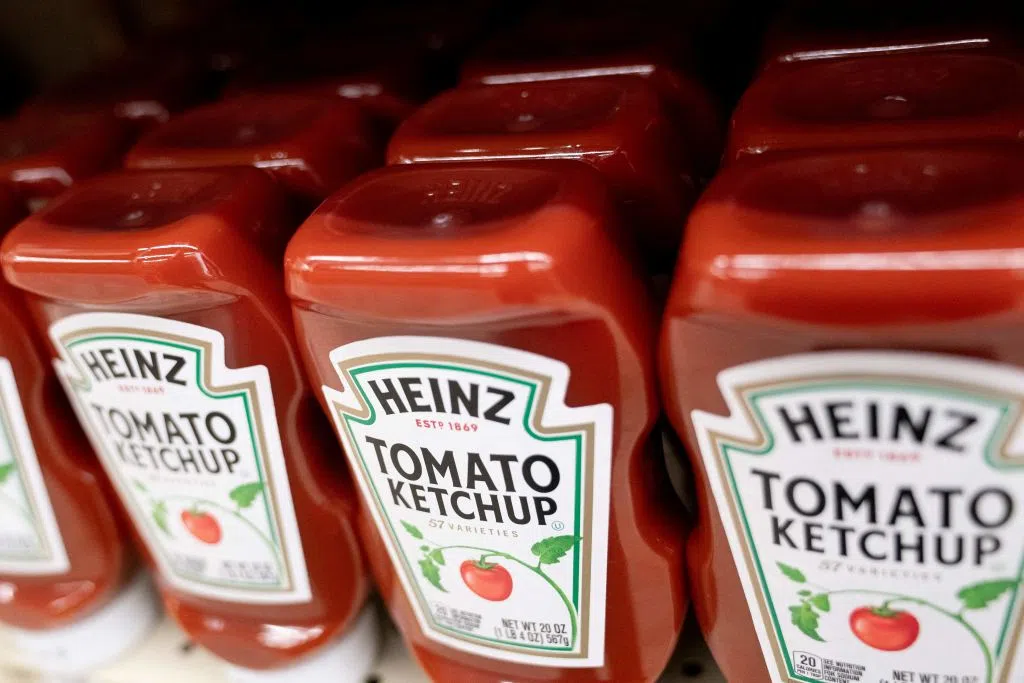
On Wednesday’s Mark Levin Show, processed foods should be defended against their common portrayal as dietary villains. About 100 years ago, mass urbanization, poverty, and lack of refrigeration made fresh food scarce, expensive, and prone to spoilage or contamination in cities, leading to widespread issues like foodborne illnesses, malnutrition, and short life expectancy. Processed foods, including canning, pasteurization, and preservatives, emerged as a critical solution to feed growing populations safely and affordably, preventing starvation and reducing risks from rancid items. While some synthetic additives may have downsides, they are far safer than historical alternatives like rotten eggs or swill milk. Also, our military personnel deserve our respect and our gratitude. They stand ready to act on orders from President Trump to protect current and future generations from Iran. Ordinary Americans strongly support the military, unlike Marxists, Islamists, woke individuals, neo-Nazis, and isolationists. Isolationism against evils like Islamism, Communism, and fascism is suicidal. Later, decades ago Landmark Legal Foundation and other patriot lawyers litigated school choice, starting in Milwaukee, Wisconsin. They represented a black liberal state representative, Polly Williams, and her constituents in the city’s poorest areas, advancing an idea originated by the late Dr. Milton Friedman. The program aimed to let money follow inner-city students—primarily minority and black children—out of failing, crime-ridden, union-controlled, government-run schools to better options, including participating private schools. Despite fierce opposition from Democrats, the NEA, AFT, NAACP, and others, the effort succeeded through multiple victories at the Wisconsin Supreme Court and twice at the U.S. Supreme Court over years. These wins, achieved alongside key colleagues and heroes, established school choice as one of the greatest civil rights victories in modern times, without which it would not exist.
The Free Press
In Defense of Processed Foods
Photo by Stefani Reynolds/AFP
The podcast for this show can be streamed or downloaded from the Audio Rewind page.
Rough transcription of Hour 1
Segment 1
Hello, America. Mark Levin here. Our number 877-381-3811. 877-381-3811. You know. 3 hours on radio may seem like a long time. It’s really not. And so sometimes I lead with information or discussions or stories or whatever. That you might say, Why is he leading with that? Because I don’t follow the crowd, because sometimes I think there are things more important. Then the media looping the same story over and over and over and over again. And to give you an update on the looped stories, I’m a big critic of the media. I think there are so many wonderful opportunities, whether it’s visual, whether it’s simply aural in any respect. To really contribute to the well-being of society with actual facts and information and knowledge. And you make the final decision. Now, some of you are going to be very upset with what I’m going to say. As far as I know, my wife will be very upset with what I’m going to say because I made a decision 10 minutes ago to leave with this story. And I’ve been working on this program all day long, and yet I came across this. At the Free Press, which is a great site, and you don’t have to always agree with everything in the free press, but it’s very well done. Barry Weiss his operation and it’s entitled In Defense of. Processed foods. Now, before I get to this. I’ve talked to you before about processed foods. And that without processed foods about a hundred years ago, people would have starved. You know, we talk about organic food now or fresh fruit and that sort of thing. What happened in the early 1900s? And decades later. The population moved heavily from rural. In more sparse areas into the city’s. There was huge, huge. Mobility and movement of people. To try and get jobs, and that includes immigration and so forth and so on. So you had slums that were created and housing projects. People were really dirt poor. But this is this is the way they could find jobs they felt. But there was no way to put fresh food, freshly butchered beef. Before we get Rancid. But people couldn’t afford to throw it away. They would eat it. They did other stuff that had chemicals on it, not chemicals through the processing of it, but people themselves would put chemicals on it, not knowing how bad they were. And you had significant instances of stomach cancer and so forth, dysentery. Having even read this entire article. Part of it, I’m going to read newly to myself and to you. But that’s how Heinz ketchup came to be. Hines was a simple man. He mortgaged his home to develop a a beef sauce. And his first product went nowhere, so he went broke. Then he had another idea. This time it would be tomato based. And he’d put it in a clear glass bottle so people could see. What they were buying and what they’d be using. Well, that took off because it hid the flavor of the rancid beef. Fish. They didn’t have freezers. The kind of freezes we’re talking about weren’t even invented yet, but most people can afford it if they were. They barely had refrigeration. So, fish, if you caught it, you had eat it pretty quickly. Pretty quickly. Things like milk would sour very quickly. So the problem was you had a concentration of people, particularly in the inner cities. Huge concentration of people. And there was no food. And to the extent there was food, it was very expensive. In the context of those days. And it didn’t last long. The transport of the food. Didn’t last long. That’s where processed foods came in. And were invented. And fed. At least two generations of Americans. Now. That’s where I’m coming from. Now let’s read this. The Pi professors Jan a Duke awaits. And Gabriel Rosenberg. And this is an excerpt from a new book that they wrote. Called Feed the People Why industrial Food is good and how to make it even better. In the introduction to this by the Free Press is the following Processed foods have become the go to villain in America’s Health Story picture. The package is crowding supermarket aisles, frozen dinners, canned food, soda, chips, their pack with preservatives and additives, and often blamed especially by champions of the Make American Healthy Agenda. Four Soaring rates of obesity, chronic disease. And it goes on. But just how harmful are they, really? That’s the central question in this new book. And in this excerpt. These professors contend that processed foods, even ultra processed ones, are the dietary demons many make them out to be. And today’s calls to purge them entirely and quote unquote, be clean, they suggest offer no magic fix. In fact, such advice even might leave the situation worse. Now, let’s get to. The content of the book in some respect, and I think this might interest all of you. I actually. So I’m reading this anew for you and me. In 1929, the canned meat company Libby McNeil and Libby printed a now legendary pumpkin pie recipe on the side of the cans of its 100% pure pumpkin 1929. It was an enormous hit, and pumpkin pie became a national superstar. But the cans branding wasn’t quite accurate and still isn’t, according to the FDA regulations. The contents of a can of pumpkin can be made of a variety of squashes that we don’t conventionally call pumpkins. And in fact. Most canned pumpkin you’ve ever eaten is probably something called. Eh, Dixon? Squash. Apologies if you’re a pumpkin purist, But if you are, and you’ve and you just found this out, what’s the alternative? Roasting and parading a pumpkin yourself. That’s a bad idea. Store bought pumpkins don’t have the right starch or water content for the custard. Go to any bakery or grocery the week before Thanksgiving and ask them what they use for their pies, and they’ll tell you the truth. It’s from the can. Now, here’s the good news. The industry goo is great. To this day, the only ingredient in Libby’s canned pumpkin is a mush of assorted squashes. They take millions of gourds grown on an astonishing scale peel, seed and puree them. Cram that puree into shelf stable aluminum cans. And ship them off to grocery stores by the truckload. The stuff in these cans is nutritionally identical to a fresh pumpkin or squash, if you will. Moreover, it will all excuse me. It will sit safely on your shelf for 900 days or more without spoiling. Meanwhile, fresh pumpkins you will recall from your front step after Halloween. They tend to rot after a week or so. Now, what’s the point of all this? Well, the point is, I need to put my glasses on because I can’t read this. Just hang with me. Hang with me. This is all very interesting to me. And I think to you, perhaps. What’s the point of all this, you ask? The point is that we have been trained to think of particular foods as good or bad or even noble and sinful. So-called processed foods, those made with preservatives or other chemicals and which often come and they can usually fall into the latter category as sinful. It’s not difficult to find people deriding whole categories of industrial foods as an unmitigated menace. But like pumpkin pie, the truth is a bit more complicated. In his 28 book In Defense of Food, journalist and Professor Michael Pollan famously instructed people to do the following quote, Don’t eat anything your great great grandmother wouldn’t recognize as food, unquote. It’s a common refrain intended as an indictment of a modern nutrition system dominated by artificial ingredients. But it ignores a glaring truth. Our great, great grandmother’s didn’t exactly live at a time of peak nutrition. They didn’t have electricity or running water. They wouldn’t recognize a box of fusilli or, for that matter, a mango as food. In their old world, there were no refrigerators in homes. No frozen foods. Canning was a crapshoot, and there were no supermarkets, let alone an FDA, to make sure your flour, butter and milk were unadulterated. The result was illness. What I was touching on earlier, food borne diseases like typhoid fever, botulism were common. Even more ubiquitous were diseases caused by now malnutrition, rickets. A debilitating childhood condition caused by vitamin D deficiency led to both legs stunted growth curve spines. These are just the ones whose name you may recognize. Ever hear of marimbas? Must be glad if you didn’t. Thanks in part to poor food. Our great great grandmother society was chronically unhealthy in New York City in 1920. Up to 75% of all children were, to some degree, affected by rickets. Average life expectancy in 1900 was 47 years. When the United States initiated a draft during World War One, about 30% of the men who were called up were deemed unfit for combat, largely because of poor health attributable to dreadful nutrition. The solution was a better diet offered by U.S. food processing. Pasteurization of milk, originally developed in the 1860s and adopted at a scale in the early 20th century, has saved countless millions of infants and babies lives by eliminating dangerous pathogens. Preservation techniques like canning prolong the shelf life of many foods, improving food access and reducing food waste from spoilage. These changes came alongside the emergence of a modern regulatory state, ensuring foods met new standards of health. Meanwhile, advances in transportation and refrigeration technology in the early 20th century gave birth to a radical new way to buy food. The supermarket, which improve the quality and safety of food for most consumers. Interesting, Mr. Producer. Synthetic preservatives may be to some extent unhealthy, but compare them to the common adulterants found in the swill milk of 19th century New York City that sickened thousands of children. Rotten eggs are arguably more natural than potassium sorbate a common anti mold preservative found in. Days dairy products. But we would rather eat the potassium sorbet. It’s only when you take for granted. That your diet won’t immediately kill you, that you begin to ponder whether it might contribute to cancer, heart disease in a few decades. Now I want to continue this. I think it’s very important and I’ll tell you why when I’m done with the article. But this is very, very important for a variety of reasons. We’ll be right back.
Segment 2
We only have 2 minutes this segment. I want to continue this after the bottom of the hour so it’s coherent. But I want to thank you folks in the audience here. You know, my main hub, the core of everything is radio, conservative talk radio. It’s my love. But we get our numbers every every week on Saturday and Sunday from Fox on my show overall and so forth. And my numbers on Saturday for my life, Liberty and live in program were 30% higher than a year ago, and they were huge a year ago. And my numbers on Sunday were 25% higher than they were a year ago, despite the NBC, NBA All-Star Game and all the rest. And that’s that’s thanks to you. And we have a very vigorous audience here. You. In radio. And I want to thank you on this video podcast that I’ve launched. Those of you who have taken the time to view it, you’ve made a huge difference. I’m not going to go south. I’m not going to do the stuff that gets all the hits and the grifters and all the rest. There are millions and millions of years. I’m not going to do it. We will slowly build this program, this video podcast, and we will show that the American people want intelligent information in today’s program. On Liberty’s Voice is number one about Rush Limbaugh passed away five years and one day ago. And I give some personal stories. I don’t speak out of school, but things I haven’t discussed before. And also I lay out the situation in Iran, the armaments in the situation and tomorrow’s program. I’m going to get back to the founding, the 250th year. We’ll dig deeper as I want to do throughout the course of this year. Just go to YouTube. It’s Liberty’s voice. You can subscribe there. Go to Rumble. And that would be at Mark Levin Show and follow. But viewers, take a look. We’ll be back.
Segment 3
I got a request and then a video from somebody I care about a lot who I respect a lot who’s been through hell. Dennis Prager. And he has a book coming out next Tuesday. And he wanted me to have the first exclusive interview on Sunday on Fox. And I said, Of course. And he sent me a video. And this is a remarkable human being, both physically and mentally. And I very much look forward to having him on life, liberty and live in on Sunday as our second guest. Our first guest Sunday will be America’s governor, Ron DeSantis. I can never get enough for him. He’s great. And on Saturday, we’re going to have Stephen Moore, because the economy is actually doing well and is about to explode into prosperity. And with the State of the Union coming up, I think it’s important that we hear from Steve Moore, one of the best, and Rich Goldberg, certainly one of the best when it comes to Iran. So we have our programs lined up. Obviously, I haven’t done them yet, and I will be doing my monologues for those as well. So we’re very, very busy here with our sort of interlocking platforms and formats from radio, TV and video podcasting. The only other thing I could do, Mr. Producer, is get a soapbox sticking in the middle of the park down the street and scream at the top of my lungs, which maybe I’ll do. You never know. But again, I want to thank you. I noticed some other people are launching a podcast all of a sudden, too. And that’s good. More the merrier. And I want to thank Rumble Chris, the majority owner over there. They’ve been nothing but completely supportive of Liberty’s voice. You can go over to Rumble Liberty’s voice, YouTube, Liberty’s voice we’re working on now, getting on Apple and Spotify. It’s just a slow process. I’ve a very small staff, it’s self-funded and everybody’s working very, very hard. Again, tomorrow’s program will be back on to our history. And I want everybody to understand it. And I try and go deep into that. And today’s program is fantastic. So I want to encourage all of the Knights, all patriots, to view it, to check it out. Back to this article. As they pointed out, the two professors. It’s only when you take for granted that your diet won’t immediately kill you, that you begin to ponder whether it might contribute to cancer, heart disease in a few decades. Now, of course, those worries are legitimate as well by solving the problems of scarcity. The modern food system has created problems of abundance, problems of abundance. The processed food we eat now contributes to an epidemic of non-communicable diseases ranging from obesity, diabetes to heart problems. 40% of American adults are obese. 9% of the US population has been diagnosed with type two diabetes and another 38% of the adult population is pre-diabetic. The direct health care costs of these ailments run to around $600 billion annually. We are not a healthy society and as a result, eaters are frequently overwhelmed by both choices of foods and messages about what to eat. Many have embraced diets peddled by flimflam health influencers that are hard to follow for very long and are not particularly healthy. Gwyneth Paltrow, for example, has told her millions of followers that her ideal lunch consists of bone broth. 121 day program promoted by Paltrow and other so-called wellness influencers, tells eaters to avoid oranges and shellfish, soy and soy derived products. Almonds and barbecue sauce. Meanwhile, a growing body of self-anointed fitness and diet experts, including the podcaster Joe Rogan, advocate for a virtually all meat carnivore diet, one that cuts out the sugars necessary for, among other things, proper cognitive function. Flawed dietary advice has even reached the government. They talk about. Let’s see here. Where they heavily emphasize natural foods, quote unquote, as a means to combat our diseases of affluence. But our great grannies would think little of the people today who turn their backs on modern food safety, such as the rising number of people flocking to raw milk. Raw milk, as they knew, is a reservoir of diseases and in recent years has been linked to dozens of salmonella outbreaks. There are few things more irrational than turning your back on over a century of food safety advances to purposely take risks with your and your kids health in the name of eating more so-called natural foods. And they go on. But. This is the reality of the modern era. To look at see here to look at the American food landscape is to be assailed by thousands of messages about food. Some of the best and simplest dietary advice winds up drowned out by websites, social media posts, blogs, podcasts and books pushing complicated and often bad advice. And so now, now we have a $90 billion U.S. weight loss and diet industry that largely peddles information and diets that are not based on solid peer reviewed evidence. And when fad diets fall, as they almost invariably do, eaters find themselves right back where they started only poor. For all the money that they spend on supplements and branded health foods. So what should we eat? And how can we preserve the tastiness and the efficiency and affordability and safety and availability and nutritional quality that industrial processing can provide without exposing eater eaters to harmful side effects, according to nutrition experts at Tufts University. World renowned Friedman School of Nutrition, Society and Policy, A good, affordable diet for most consumers, entails the polar opposite of what most health influencers and culinary naturalists argue. Taking advantage of high quality industrial foods, not shunning them. In fact, a tendency to shun high quality industrial foods and consequently making your diet narrow, rigid and impracticable may be one reason that so many dieters belly flop. Moreover, contrary to a number of widely publicized studies, many ultra processed foods are not unhealthy in and of themselves. Consider one study published in the prestigious British Medical Journal. I don’t know that we want to take full advice from the British. No offence, Mr. British, I’m just saying. Which used prestigious exhibit, which is data from a large cohort of Americans to assess the links between diets and health outcomes. The widely reported topline finding was that those participants who had a diet high in ultra processed foods ups had a slightly higher mortality rate than those who didn’t. Scary, but dig a little deeper. And in fact, the correlation between ultra processing and mortality was statistically significant only for processed meat and seafood, as well as sugary drinks, cereals and desserts. All the others made no statistically significant contribution. The study merely confirmed what we have known for decades. Too much meat, especially red and cured meats and too much sugar are bad for your health. There is, however, one very important study that gives hints about why and which processed foods can be bad for our health. In an experiment, nutritionist Kevin Hall gave two groups of people two diets, one with no processed and the other with 80% processed. Dieters were responsible for moderating food intake themselves, and the processed gobbling group gained weight. Why? They tended to eat 500 calories more per day than the other group. That’s because the processed foods tended to be addictively crispy and crunchy, meaning that they went down too quickly or in higher quantities than people might otherwise have eaten them. And here we get to the problem with processed foods. It’s mostly not the ultra processing itself that’s the problem. Rather, it’s that ultra processed foods can be extremely tasty, easy to eat, convenient vehicles for unhealthy ingredients. So here’s the takeaway It’s worthwhile to moderate processed intake, especially when those processed foods are processed. Meats are high in sugar or salt, but completely eliminating processed foods or junk food, for that matter, from your diet, Well, no more guarantee health then. Eating them in light moderation will kill you. Don’t let the fearmongering about so-called bad foods in the way of following basic advice about a healthy diet are make you second guess your ear. Fortified packaged bread, peanut butter or frozen bean burrito. There is no reason to use processing and ultra processing or unnatural or industrial as a shorthand for bad. And in fact, doing so would unnecessarily deprive us of a great many culinary joys. For example, if you ask Bostonians to name the best bagel in the city, many of them will refer We refer you to Bagel Guild nestled in Boston Public Market. But here’s the thing about the breakfast they might miss. It is a happy product of modern food technology and industrial processing. The wheat in that bagel is likely a crossbreed grown as a mono crop milled in a factory fortified with minerals and vitamins and shipped thousands of miles. It’s baked in a bakery that follows strict health regulations imposed by the city of Boston and the great state of Massachusetts. The cream cheese reconstituted pasteurized milk product mixed with Caribbean gum and potassium sorbate the LOX safe packaging and a refrigerated cold chain. Mean you’re not thinking about spoiling the food borne diseases? Opting for the vegan schmear. Soybean oil and soy protein isolate with a dash of added sugar. The coffee. It’s grown in Central America, industrially roasted and processed. Shipped in bulk over thousands of miles. The oat milk, well, oats, rapeseed oil and added vitamins and minerals. Only you don’t think about it that way, and you shouldn’t. It’s delicious. It’s healthy and it’s cheap. And you wouldn’t think twice about whether it was safe or indeed if there would be bagels available today or not. That is because of the unseen beneficence of modern food technology and processing. Think twice. The next time someone insists otherwise. Now that may open your eyes to a lot of things. In other words, there’s bad food and there’s good food, but it doesn’t mean that processed food or even ultra processed food is bad for you. It depends what kind of food it is. If it’s heavy in sugar, that’s a problem. If it’s heavy in salt, that’s a problem. But that’s what natural foods or processed. Foods. That’s the point. The point is the main ingredients. Does that make you feel better, Mr. Producer? It should. Because without processed foods or ultra processed foods. Many of us would starve to death or we’d have nutritional issues. We would be malnourished. We would lacked the kind of vitamins and minerals that we need. You look at Swanson Foods. Where did that come from? No, not Tucker Carlson. Nothing came from him except a lot of blood related gas. No. This was a man who was a fisherman. And he would catch fish by himself. He had a cabin. He would hang the fish. And he would have to consume the fish. He couldn’t really transport it. Could Bailey bring it home to his family? And he got the idea because he was fishing one season and it was winter. It was very cold. And guess what he did, Mr. Producer? He put the fish in the snowy ice. And he noticed. That have preserved the fish. Along came the invention of the freezer. After that. The invention of freezer. Train cars. After that, the invention of freezer trucks. And then came frozen food. We can freeze fish, but we can freeze peas. We can freeze green beans. Wait, We can freeze meat. Then later advanced. We can free freeze pre-cooked meals. And frozen food was all the hit. And it fed a ton of people and kept them alive. I’ll be right back.
Segment 4
During the break. Ladies and gentlemen, go ahead to YouTube. Subscribe to Liberty’s Voice. Go to Rumble. Rumble and follow us at the Mark Levin show and make sure when the program is over, you view the podcast, you’re going to love it. We’ll be right back.


